
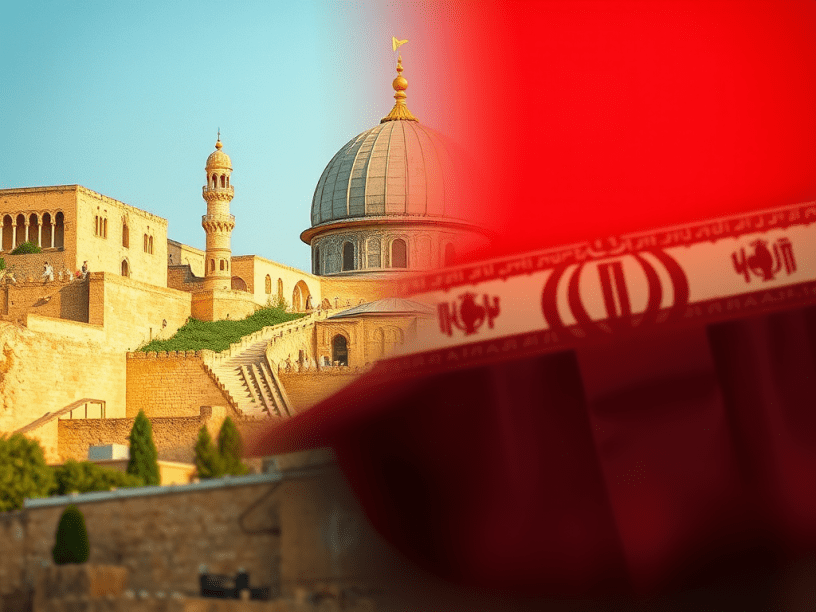
The current war between Iran and Israel includes three Abrahamic religions: Judaism, Islam, and Christianity. While some people view this as just another war among countries with different national objectives, some see it as a religious war.
I focused on the oldest and youngest of the three Abrahamic religions in the last parts of this series (Judaism & Islam). I spent one article for each because there are not many divisions within those religions. Judaism currently has five:
- Orthodox – subgroups include Modern Orthodoxy, Ultra-Orthodoxy (e.g. Haredi, Hasidic)
- Conservative
- Reform – liberal
- Reconstructionist – evolving
- Secular – humanistic, non-religious
Islam has two primary divisions, along with some smaller groups:
- Sunni
- Shia
- Sufi
- Ibadi
- Ahmadiyya
How many divisions within Christianity? Thousands. As you can imagine it will take more than one article to cover Christianity. Let’s begin with a little history.
Christianity
“Then Barnabas departed for Tarsus to seek Saul. And when he had found him, he brought him to Antioch. So it was that for a whole year they assembled with the church and taught a great many people. And the disciples were first called Christians in Antioch.” Acts 11:25-26
Until the Apostle Paul became involved in ministry with Gentiles in Antioch, followers of Jesus Christ were known as ‘disciples of Christ’ and followers ‘of the Way’ (Acts 9:2). The ‘disciples were first called Christians in Antioch.’ Some people believe the use of the term ‘Christian’ was a way of mocking disciples of Christ. However, it may be more than that.
“I will come to visions and revelations of the Lord: I know a man in Christ who fourteen years ago—whether in the body I do not know, or whether out of the body I do not know, God knows—such a one was caught up to the third heaven. And I know such a man—whether in the body or out of the body I do not know, God knows— how he was caught up into Paradise and heard inexpressible words, which it is not lawful for a man to utter.” 2 Corinthians 12:1-4
The Apostle Paul was writing about his personal experience. When you go back fourteen years from when Paul wrote 2 Corinthians (55/56 AD) you see that Paul had his visions (ὀπτασία – optasia) and revelations (ἀποκάλυψις – apokalupsis) from God prior to his ministry in Antioch (45/46 AD). That was also before Paul left Antioch with Barnabas to begin his missionary journeys to the Gentile nations. That means whatever Paul saw and heard in ‘Paradise’ was already part of his spiritual understanding and calling as an apostle to the Gentiles. That’s important to know because what he experienced in the ‘third heaven’ impacted his preaching, teaching, and writing for the rest of his ministry.
Paul said he heard ‘inexpressible’ words. The Greek word for ‘inexpressible’ is ἄρρητος (arrétos). It comes from árrhētos which means ‘unutterable because beyond description.’ Paul also wrote that the ‘inexpressible’ words were ‘not lawful for a man to utter.’ Based on the Greek words used we come away with the idea that what Paul heard included words that were beyond human ability to express and were also ‘not lawful’ (ἔξεστι) which means ‘not permitted.’ So, what did Paul see and hear in ‘the third heaven’ that he was able and allowed to express?
Paul also wrote this a few years after he wrote 2 Corinthians:
“For this reason I, Paul, the prisoner of Christ Jesus for you Gentiles— if indeed you have heard of the dispensation of the grace of God which was given to me for you, how that by revelation He made known to me the mystery (as I have briefly written already, by which, when you read, you may understand my knowledge in the mystery of Christ), which in other ages was not made known to the sons of men, as it has now been revealed by the Spirit to His holy apostles and prophets: that the Gentiles should be fellow heirs, of the same body, and partakers of His promise in Christ through the gospel, of which I became a minister according to the gift of the grace of God given to me by the effective working of His power. To me, who am less than the least of all the saints, this grace was given, that I should preach among the Gentiles the unsearchable riches of Christ, and to make all see what is the fellowship of the mystery, which from the beginning of the ages has been hidden in God who created all things through Jesus Christ; to the intent that now the manifold wisdom of God might be made known by the church to the principalities and powers in the heavenly places, according to the eternal purpose which He accomplished in Christ Jesus our Lord, in whom we have boldness and access with confidence through faith in Him. Therefore I ask that you do not lose heart at my tribulations for you, which is your glory.” Ephesians 3:1-13
Based on my study of the second half of the Book of Acts and Paul’s letters, Paul knew the ‘mystery’ when he began his ministry to Gentiles in Antioch. What he heard in ‘Paradise’ may have also impacted some of his ministry in Tarsus and Cilicia (approx. 37-45 AD), which is where he was raised and where Barnabas found him and took him to Antioch. The Holy Spirit inspired Paul both in his ministry and his writings, so the Spirit may have revealed more things to Paul during his years of traveling and spending time in prisons for preaching the Gospel of Christ. The important point is that Paul knew things that the Jewish apostles didn’t know (e.g. Acts 15; Galatians 2). Keep in mind that what Jesus did in calling and teaching the Jewish Apostles and what He did in calling Paul were part of God’s Eternal Plan. We must not forget that.
Stand Your Ground
The Apostle Paul faced steady and sometimes fierce opposition during his years in ministry. Remember that he had led the charge for the Jewish high priest and other rulers of the Jews against the disciples of Christ. Jesus meeting Paul (Saul) on the road to Damascus changed everything for Paul. He went from being Israel’s ‘golden boy’ to being ‘enemy #1.’ You’ll see that in the Book of Acts from chapter 8 to chapter 28. You’ll also see evidence of the opposition Paul faced in many of his church and personal letters.
Here are some examples from early opposition to Paul’s ministry. The first one started right after his conversion:
“Immediately he preached the Christ in the synagogues, that He is the Son of God. Then all who heard were amazed, and said, “Is this not he who destroyed those who called on this name in Jerusalem, and has come here for that purpose, so that he might bring them bound to the chief priests?” But Saul increased all the more in strength, and confounded the Jews who dwelt in Damascus, proving that this Jesus is the Christ. Now after many days were past, the Jews plotted to kill him. But their plot became known to Saul. And they watched the gates day and night, to kill him. Then the disciples took him by night and let him down through the wall in a large basket.” Acts 9:20-25
Even the Jewish apostles in Jerusalem were afraid of Paul at first, but Barnabas vouched for him. That led to the next example of persecution Paul faced from Jews:
“And when Saul had come to Jerusalem, he tried to join the disciples; but they were all afraid of him, and did not believe that he was a disciple. But Barnabas took him and brought him to the apostles. And he declared to them how he had seen the Lord on the road, and that He had spoken to him, and how he had preached boldly at Damascus in the name of Jesus. So he was with them at Jerusalem, coming in and going out. And he spoke boldly in the name of the Lord Jesus and disputed against the Hellenists, but they attempted to kill him. When the brethren found out, they brought him down to Caesarea and sent him out to Tarsus.” Acts 9:26-30
Paul spent many years ministering in Tarsus and Cilicia after that. It was also during that time that Paul had his ‘third heaven’ experience. When the Jewish disciples heard about Gentiles being ‘saved’ in Antioch they sent Barnabas to investigate. When Barnabas saw what God was doing in Antioch, he ‘departed for Tarsus to seek Paul’ (Acts 11:25). Paul went with Barnabas to Antioch and they spent ‘a whole year’ teaching at the church. That’s when followers of Jesus were first called ‘Christians.’
The Holy Spirit showed a prophet named Agabus that there was going to be a ‘great famine throughout the world’ during the days of Claudius Caesar. Agabus traveled from Jerusalem to Antioch to share the prophecy with the church. The Gentile church determined to send relief to the Jewish disciples living in Judea. The elders chose Paul and Barnabas to take that relief to Jerusalem (Acts 11:27-30). It was while Paul and Barnabas were in Jerusalem that they brought Barnabas’ cousin Mark with them to Antioch (Acts 12:25). Mark went with them after the Holy Spirit called out Paul and Barnabas to go on a missionary journey to preach Christ to more Gentiles (Acts 13:1-3). They traveled to Cypress, faced some opposition there, then set sail for they came to Perga in Pamphylia. However, Mark decided to leave them for some reason and return to Jerusalem. That would cause problems for Paul and Barnabas later.
Paul’s calling from Christ was to Gentiles, their kings, and Jews. Paul, being a Jewish scholar and loving the people of his birth, often preached in synagogues when he would come to a new city. He was usually met with strong opposition. Here’s an example from Paul’s first missionary journey when he preached in Antioch of Pisidia. It’s a demonstration of how Paul stood his ground even in the face of fierce opposition:
“On the next Sabbath almost the whole city came together to hear the word of God. But when the Jews saw the multitudes, they were filled with envy; and contradicting and blaspheming, they opposed the things spoken by Paul. Then Paul and Barnabas grew bold and said, “It was necessary that the word of God should be spoken to you first; but since you reject it, and judge yourselves unworthy of everlasting life, behold, we turn to the Gentiles. For so the Lord has commanded us: ‘I have set you as a light to the Gentiles, That you should be for salvation to the ends of the earth.’ ” Now when the Gentiles heard this, they were glad and glorified the word of the Lord. And as many as had been appointed to eternal life believed.” Acts 13:44-48
This type of opposition was repeated many times during Paul’s ministry. He preached to the Jews and most would reject his message. Paul then reminded them that God had called him to take the Gospel to the Gentiles. That did not go down well with the Jews:
“But the Jews stirred up the devout and prominent women and the chief men of the city, raised up persecution against Paul and Barnabas, and expelled them from their region. But they shook off the dust from their feet against them, and came to Iconium.” Acts 13:50-51
Think things were better in Iconium? Think again:
“Now it happened in Iconium that they went together to the synagogue of the Jews, and so spoke that a great multitude both of the Jews and of the Greeks believed. But the unbelieving Jews stirred up the Gentiles and poisoned their minds against the brethren.Therefore they stayed there a long time, speaking boldly in the Lord, who was bearing witness to the word of His grace, granting signs and wonders to be done by their hands. But the multitude of the city was divided: part sided with the Jews, and part with the apostles. And when a violent attempt was made by both the Gentiles and Jews, with their rulers, to abuse and stone them, they became aware of it and fled to Lystra and Derbe, cities of Lycaonia, and to the surrounding region. And they were preaching the gospel there.” Acts 14:1-7
I wonder if things went any better for Paul and Barnabas after that experience?
“Then Jews from Antioch and Iconium came there; and having persuaded the multitudes, they stoned Paul and dragged him out of the city, supposing him to be dead. However, when the disciples gathered around him, he rose up and went into the city. And the next day he departed with Barnabas to Derbe.” Acts 14:19-20
Even though Paul faced such severe opposition during his first missionary journey, he and Barnabas returned to the cities where they were persecuted for the purpose of strengthening the souls of the disciples and exhorting them to continue in the faith. They then went down to Attalia and sailed back to Antioch in Syria. They gathered the church together and told them about all the wonderful things God had done with them and how He ‘had opened the door of faith to the Gentiles.’ Paul and Barnabas remained at Antioch for ‘a long time’ after that’ (Acts 14:21-28).
The next examples of Paul ‘standing his ground’ involved a group of men who visited Antioch from Jerusalem. They taught the Gentiles that unless they were circumcised ‘according to the custom of Moses’ they couldn’t be saved. What did Paul and Barnabas do? They stood their ground and ‘had no small dissension and dispute with them’ (Acts 15:2). That led to them traveling to Jerusalem to meet with the Jewish apostles and elders about the question.
You can read what happened in Acts 15 and Galatians 2. Paul and Barnabas stood their ground and the apostles and elders in Jerusalem finally saw that God had called Paul and Barnabas to minister to the uncircumcision (Gentiles) and that God had called Peter, John, and other Jewish apostles to minister to the circumcision (Jews). That should have resolved the problem, but it didn’t. This issue of Paul’s ministry to the Gentiles continued to be a sore spot, even for people who knew better.
Here’s another example of how Paul stood his ground, and notice that by standing his ground Paul also clearly presented the Gospel of Grace that he preached:
“Now when Peter had come to Antioch, I withstood him to his face, because he was to be blamed; for before certain men came from James, he would eat with the Gentiles; but when they came, he withdrew and separated himself, fearing those who were of the circumcision. And the rest of the Jews also played the hypocrite with him, so that even Barnabas was carried away with their hypocrisy. But when I saw that they were not straightforward about the truth of the gospel, I said to Peter before them all, “If you, being a Jew, live in the manner of Gentiles and not as the Jews, why do you compel Gentiles to live as Jews? We who are Jews by nature, and not sinners of the Gentiles, knowing that a man is not justified by the works of the law but by faith in Jesus Christ, even we have believed in Christ Jesus, that we might be justified by faith in Christ and not by the works of the law; for by the works of the law no flesh shall be justified. “But if, while we seek to be justified by Christ, we ourselves also are found sinners, is Christ therefore a minister of sin? Certainly not! For if I build again those things which I destroyed, I make myself a transgressor. For I through the law died to the law that I might live to God. I have been crucified with Christ; it is no longer I who live, but Christ lives in me; and the life which I now live in the flesh I live by faith in the Son of God, who loved me and gave Himself for me. I do not set aside the grace of God; for if righteousness comes through the law, then Christ died in vain.”” Galatians 2:11-21
Why did Peter pull away from eating with the Gentiles. It might have been out of fear of the men ‘from James’ who visited Antioch from Jerusalem because they knew that Peter had agreed to minister only to the ‘circumcision.’ It may have been for some other reason, but we’re not told. However, what was Barnabas’ excuse? He was Paul’s partner in preaching to the Gentiles. He had stood with Paul against the opposition they faced in many Gentile cities and at the council in Jerusalem. The Jews who came from James should have known about the agreement that Barnabas’ ministry was to the uncircumcision (Gentiles) just like Paul’s. Barnabas had also ministered to the Gentiles in Antioch for a long time, so why would he pull away from them just because some Jews from James visited Antioch? We’re not told, but for some reason Barnabas did not stand his ground. Paul did.
The Gospel Paul Preached
I also want to point out how Paul ‘explained’ the Gospel he preached to Peter. That might seem a bit strange since Peter preached first at Pentecost many years earlier. However, I believe the Holy Spirit inspired Paul to share the details of the confrontation with Peter to demonstrate that what God was doing with Gentiles was different than what He was doing with Jews. Remember what Paul wrote in Galatians 2? “But on the contrary, when they saw that the gospel for the uncircumcised had been committed to me, as the gospel for the circumcised was to Peter.” The ‘gospel for the uncircumcised’ had been ‘committed’ to Paul, while the ‘gospel for the uncircumcised’ was committed to Peter. The Greek word translated ‘committed’ is πιστεύω and means ‘entrusted to, put in trust with, believe.’ Jesus ‘entrusted’ the Gospel for the uncircumcision to Paul, and the Gospel for the circumcision to Peter and the other Jewish apostles.
The Greek word for ‘gospel’ is εὐαγγέλιον. The noun means ‘good news, a good message.’ The verb is εὐαγγελίζω which means ‘declare good news, preach good news, proclaim good news, bring good news.’ The noun is used 76 times and the verb 54 times in the New Testament. Jesus began His earthly ministry by ‘proclaiming ‘preaching the gospel of the kingdom’ (Matthew 4:23). He closed His earthly ministry by telling His disciples ‘this gospel of the kingdom will be preached in all the world as a witness to all the nations, and then the end will come.’ When Saul of Tarsus (Paul) persecuted Jewish followers of Christ they scattered from Jerusalem and ‘went everywhere preaching (εὐαγγελιζόμενοι) the word’ (Acts 8:4). What was their ‘good news?’ ‘the things concerning the kingdom of God and the name of Jesus Christ’ (Acts 8:12).
The ‘good news of the kingdom’ that the Jewish believers preached upon scattering from Jerusalem would have been the message of the Jewish apostles. What did Peter preach in Jerusalem on Pentecost?
“Therefore let all the house of Israel know assuredly that God has made this Jesus, whom you crucified, both Lord and Christ.” Now when they heard this, they were cut to the heart, and said to Peter and the rest of the apostles, “Men and brethren, what shall we do?” Then Peter said to them, “Repent, and let every one of you be baptized in the name of Jesus Christ for the remission of sins; and you shall receive the gift of the Holy Spirit. For the promise is to you and to your children, and to all who are afar off, as many as the Lord our God will call.” Acts 2:36:39
What did Paul preach immediately after he was saved? ‘… he preached the Christ in the synagogues, that He is the Son of God’ (Acts 9:20). Interestingly, Paul did not use the term ‘gospel of the kingdom’ during his ministry. So, what did he call the gospel he preached – especially after he received ‘visions and revelations of the Lord’ (2 Corinthians 12:1)? Here are some examples:
- the gospel of Christ (e.g. Romans 1:16; 15:19; 1 Corinthians 9:12; 2 Corinthians 9:13; Galatians 1:7)
- the gospel of the grace of God (Acts 20:24)
- the gospel of peace (Romans 10:15; Ephesians 6:15)
- my gospel (e.g. Romans 2:16; 16:25; 2 Timothy 2:8)
What did Paul mean when he wrote ‘my gospel?’ Did he mean he was preaching good news about himself? No. He was preaching good news about Jesus Christ that the Lord had given him to preach:
“Now to Him who is able to establish you according to my gospel and the preaching of Jesus Christ, according to the revelation of the mystery kept secret since the world began but now made manifest, and by the prophetic Scriptures made known to all nations, according to the commandment of the everlasting God, for obedience to the faith— to God, alone wise, be glory through Jesus Christ forever. Amen.” Romans 16:25-27
Notice that Paul said the Gospel he preached was, ‘according to the revelation of the mystery kept secret since the world began.’ Who gave Paul the ‘revelation of the mystery kept secret since the world began?’ God did –
“For this reason I, Paul, the prisoner of Christ Jesus for you Gentiles—if indeed you have heard of the dispensation of the grace of God which was given to me for you, how that by revelation He made known to me the mystery.” Ephesians 3:1-3
Paul was clear about the details of the Gospel he preached:
“Moreover, brethren, I declare to you the gospel which I preached to you, which also you received and in which you stand, by which also you are saved, if you hold fast that word which I preached to you—unless you believed in vain. For I delivered to you first of all that which I also received: that Christ died for our sins according to the Scriptures, and that He was buried, and that He rose again the third day according to the Scriptures, and that He was seen by Cephas, then by the twelve. After that He was seen by over five hundred brethren at once, of whom the greater part remain to the present, but some have fallen asleep.After that He was seen by James, then by all the apostles. Then last of all He was seen by me also, as by one born out of due time.” 1 Corinthians 15:1-8
Paul presented the Gospel he had preached to the Corinthians in a logical format that included the ‘truth claim’ followed by the ‘evidential support’ for that claim. He ‘delivered’ (παραδίδωμι – bring forth, commit, hand over’) a message of good news to the Corinthians which he had ‘received’ (παραλαμβάνω – to receive near, to receive from, learned’). The good news is that Jesus Christ died for our sins (‘according to the Scriptures’), was buried, and rose again on the third day ‘according to the Scriptures’). That’s what Paul meant when he told a pagan jailer in Philippi to ‘Believe on the Lord Jesus Christ, and you will be saved, you and your household’ (Acts 16:31).
We know almost nothing about the ministry of the Jewish apostles after Acts 15 because the rest of Acts focuses on the ministry of Paul. Why? Because that was what God had planned from Eternity. It was a ‘mystery’ and surprised the Jewish apostles, but it had always been God’s plan. We must remember that as we study and interpret Scripture. If we don’t, we’ll get confused.
The last time the Apostle Peter’s name is mentioned in Acts is Acts 15:7. That doesn’t mean Peter didn’t continue to have a ministry after the Jerusalem ‘council.’ We know from what Paul wrote about Peter and the other Jewish apostles that God had called them to preach ‘to the circumcision’ (Galatians 2:9). However, the Book of Acts doesn’t tell us what they did during the years Paul was traveling to Gentile nations. One exception is when Paul met with James and the elders and ‘told in detail those things which God had done among the Gentiles through his ministry’ (Acts 21:19).
Peter also did not detail his ministry travels in the letters he wrote to ‘pilgrims of the Dispersion‘ toward the end of his life (1 and 2 Peter), but he did acknowledge that the words Paul wrote in his letters were ‘hard to understand,’ and called them ‘Scripture.’ That would be consistent with what Peter had learned about what Jesus Christ did by entrusting Paul with the ‘gospel for the uncircumcised’ even as He had entrusted Peter and the other Jewish apostles with the ‘gospel for the circumcised’ (Galatians 2:7).
“Therefore, beloved, looking forward to these things, be diligent to be found by Him in peace, without spot and blameless; and consider that the longsuffering of our Lord is salvation—as also our beloved brother Paul, according to the wisdom given to him, has written to you, as also in all his epistles, speaking in them of these things, in which are some things hard to understand, which untaught and unstable people twist to their own destruction, as they do also the rest of the Scriptures.” 2 Peter 3:14-16
Paul’s Next ‘Gospel’ Journey
Paul and Barnabas had a ‘sharp contention’ about Mark traveling with them on the second missionary journey because he (Mark) had left them in the middle of the first journey to return to Jerusalem. It has long seemed strange to me that two men who had known each other for so many years and worked so closely in ministry would have ‘contended’ with each other about whether to take Mark on the next journey. I know that Mark was Barnabas’ cousin, but Barnabas should have also have had some doubts about whether Mark would leave them again in the middle of a missionary journey. I wonder if Paul also had doubts about Barnabas after he was carried away with the hypocrisy of Peter and others in Antioch. All we know for sure is that the contention was about taking Mark on the journey, but I do wonder if there was more to it than that.
“And so Barnabas took Mark and sailed to Cyprus; but Paul chose Silas and departed, being commended by the brethren to the grace of God. And he went through Syria and Cilicia, strengthening the churches.” Acts 15:39-41
Paul stood his ground because he knew what God had called him to do. No matter who opposed him, friend or foe, God’s calling came first. May we have that same courage.
Next Time
I think that one of the major reasons for so much division in Christianity comes from a misunderstanding of how to read and interpret the Bible (Old and New Testament). I’ll share some thoughts on that in the next part of this series, Iran and Israel at War.
Scripture taken from the New King James Version®. Copyright © 1982 by Thomas Nelson. Used by permission. All rights reserved.
Faith and Self Defense © 2026

 Faith & Self Defense